

Understanding Audiences
Understanding audiences is one of the most frequently repeated principles in marketing, communications and engagement strategy. Organisations are told to know their audience, segment their audiences and build campaigns around audience insight. Entire strategies are often built on demographic data, personas and generational categories.
Yet despite this attention, many organisations still struggle to connect meaningfully with the people they want to reach. The challenge is not a lack of data. It is that audience understanding often remains surface level. Demographics tell us who people are, but rarely explain why they think, feel or behave the way they do. Generational labels offer context, but they cannot capture the complexity of people’s lives, pressures and priorities.
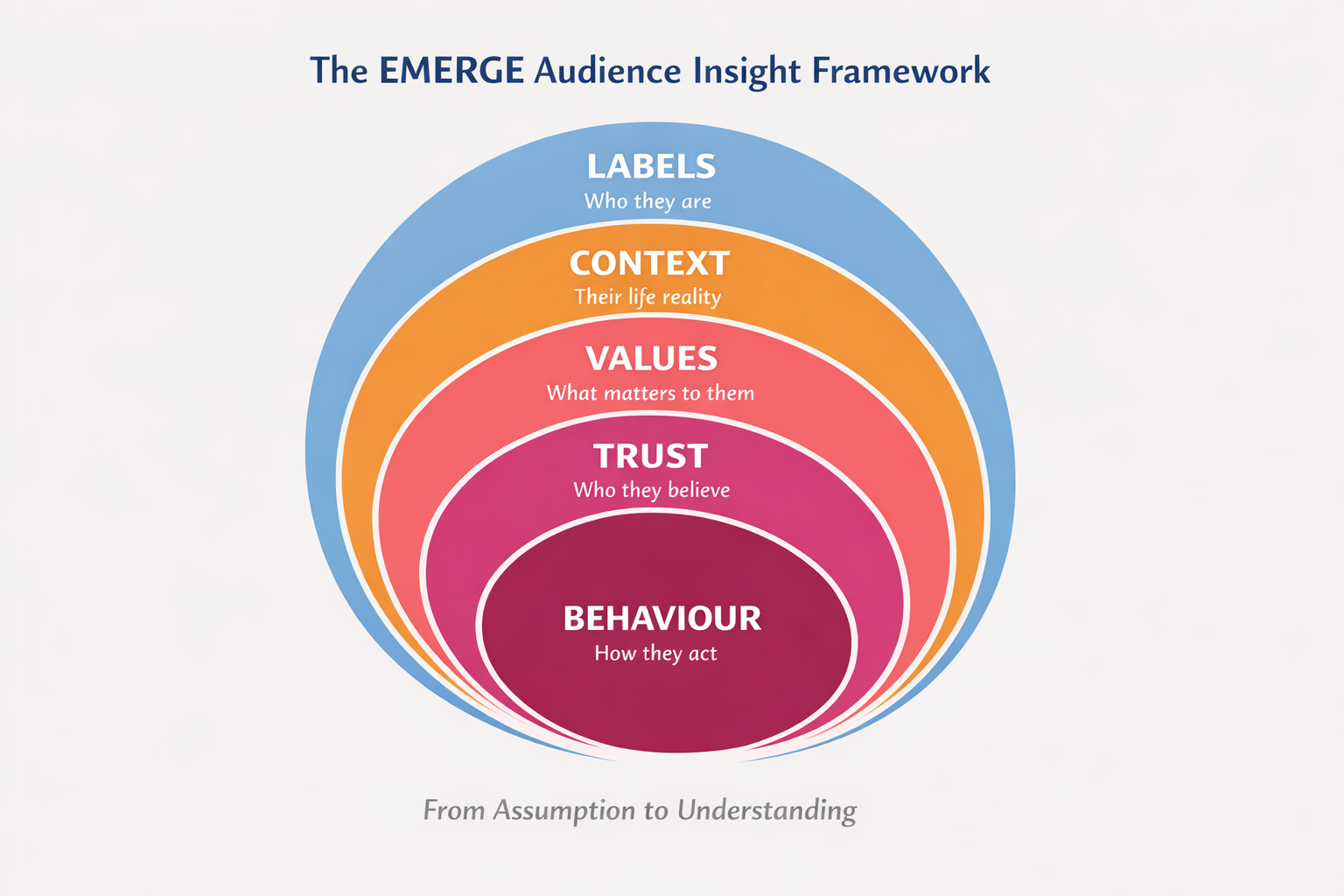
Real audience understanding requires looking beyond labels. It means understanding the context people live within, the values that shape what matters to them, the signals that build trust and the behaviours that reveal how decisions are actually made.
I’ve shared some thought pieces on where to start and key questions to ask to help you understand your audience
Understanding Your Audiences
Organisations often begin audience insight with demographics, personas or generational categories. While these can provide useful context, they rarely explain the deeper factors that shape behaviour and decision making.
This series explores how organisations can move beyond surface-level segmentation to develop a richer understanding of audiences. Drawing on the EMERGE Audience Insight Framework, these essays examine the roles of context, values, trust and behaviour in shaping how people engage — and how organisations can translate audience insight into clearer strategy and more meaningful connection.

Value or Values
Audiences do not all choose brands for the same reasons.
Some are primarily motivated by value — price, convenience and practical benefit. Others are driven by values, seeking brands that reflect their beliefs, identity or sense of purpose.
This essay explores the strategic implications of these two motivations. It examines why organisations that attempt to serve both audiences must carefully design their products, communication and customer journeys, and why a one-size-fits-all approach often leaves both audiences under-served.