

Clarity
The starting point for meaningful strategy.
Many organisations are not short of ideas, ambition or activity. What they often lack is clarity.
Clarity about why their work matters, about who it is really for and clarity about what success looks like and how to achieve it.
Without this foundation, even the most capable teams can find themselves caught in cycles of activity that generate effort but not always impact. The purpose of this section is to explore the role clarity plays in effective organisations — from defining purpose and understanding audiences, to translating strategy into action.
Through essays, free to access, frameworks and practical insight, these articles look at how organisations move from complexity to alignment, and from strategy to meaningful outcomes.

Does Conflict of Interest Still Exist?
Conflict of interest was designed to protect integrity.
To create distance.
To prevent bias.
To ensure objectivity.
But today, that distance often creates something else..
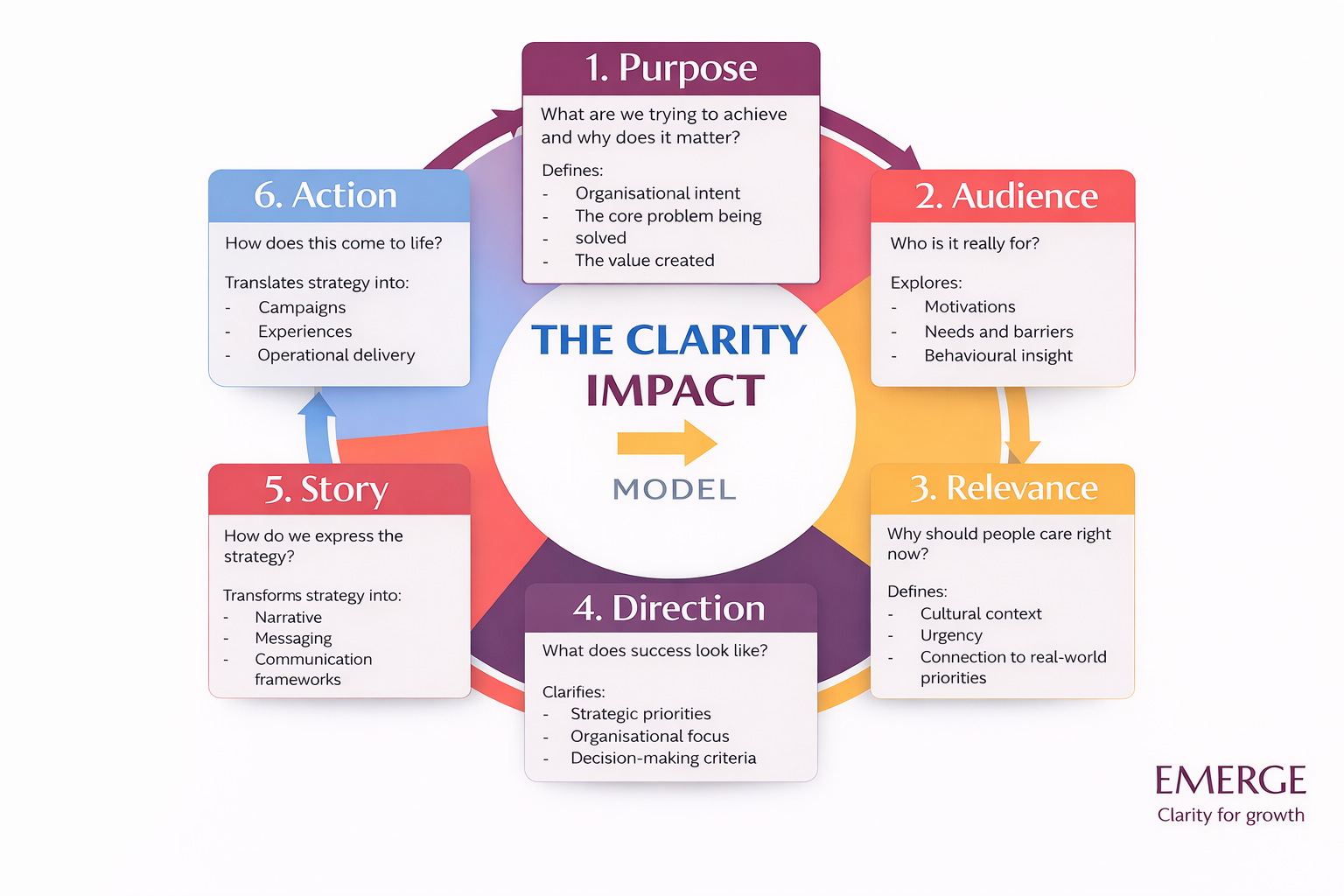
The Clarity Impact Model
The Clarity Impact Model brings together the key questions organisations need to answer before meaningful progress can happen.
It explores how purpose, audience understanding and relevance shape strategic direction, and how those ideas are ultimately translated into stories, experiences and action.
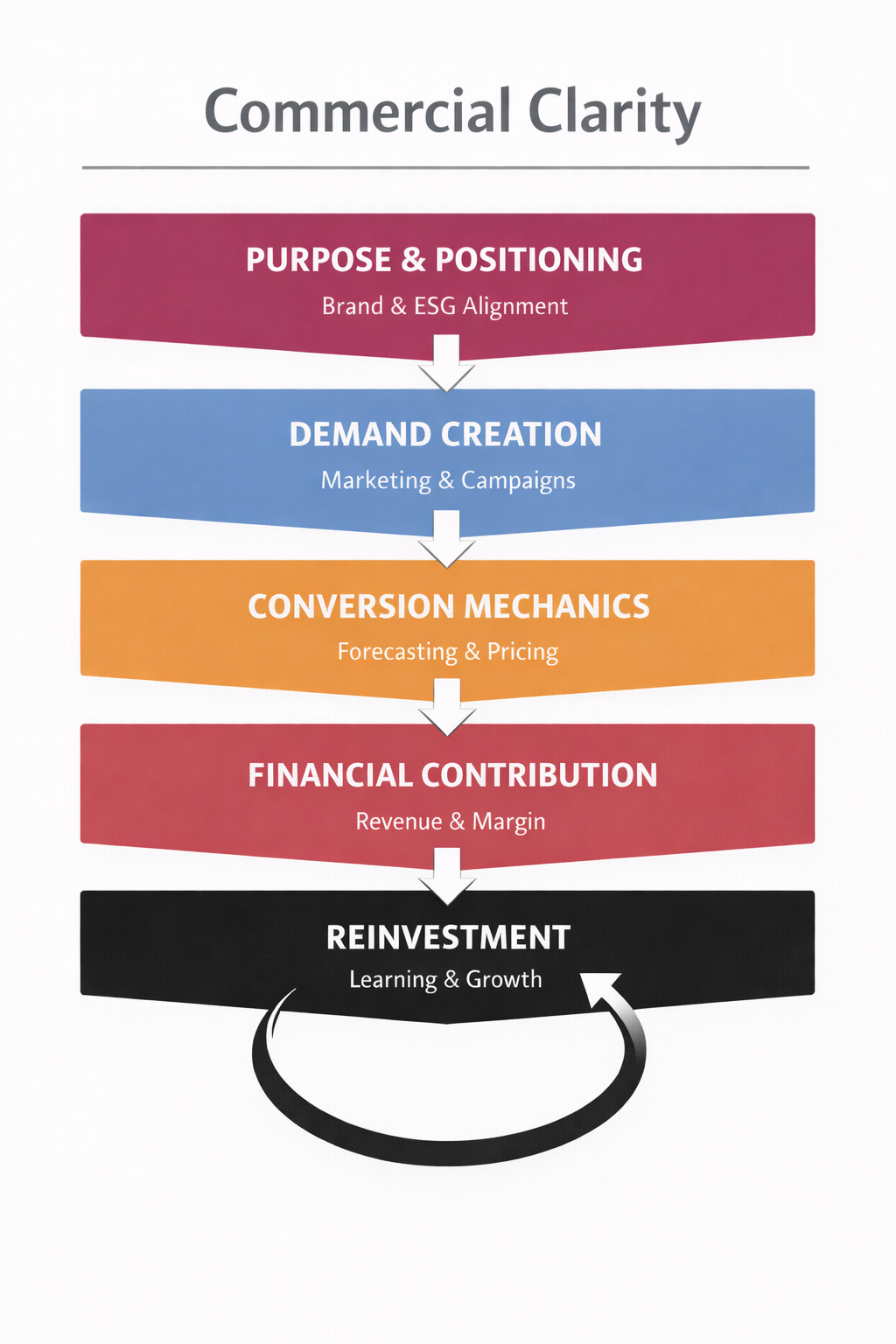
Commercial Clarity
Clarity is not only a strategic challenge — it is also a commercial one.
Organisations often struggle to articulate where value is created, how propositions connect with audiences, or how different parts of the organisation contribute to growth.
These articles explore how commercial thinking and audience understanding come together to create sustainable impact.
Why Clarity Matters
Across organisations of all sizes and sectors, the same pattern appears repeatedly.
When clarity is missing:
teams become busy but misaligned
priorities compete rather than reinforce each other
communication becomes harder
impact becomes difficult to measure
When clarity exists, the opposite happens. People move faster because they understand the direction, decisions become easier because success is defined and strategy becomes something teams can carry into their daily work.
Clarity does not slow organisations down - it allows them to move forward with confidence.