Conversion Funnels
Why every marketing strategy starts with a conversion funnel
Conversion Funnels
Why every marketing strategy starts with a conversion funnel.
Many organisations jump straight to tactics - more content, more campaigns & More channels. But marketing effectiveness rarely improves this way. The problem usually isn’t activity — it’s structure.
Without a clear understanding of how audiences move from discovery to loyalty, marketing becomes fragmented. Teams optimise individual channels, campaigns compete for attention, and success becomes difficult to measure. This is why every effective marketing strategy starts with a simple, classic & powerful model: The conversion funnel.
A well-designed funnel helps organisations understand how attention turns into action, and action turns into advocacy.
The Five Stages of the Marketing Funnel
While funnels can be designed in many ways, I fine the most effective marketing systems move through five core stages:
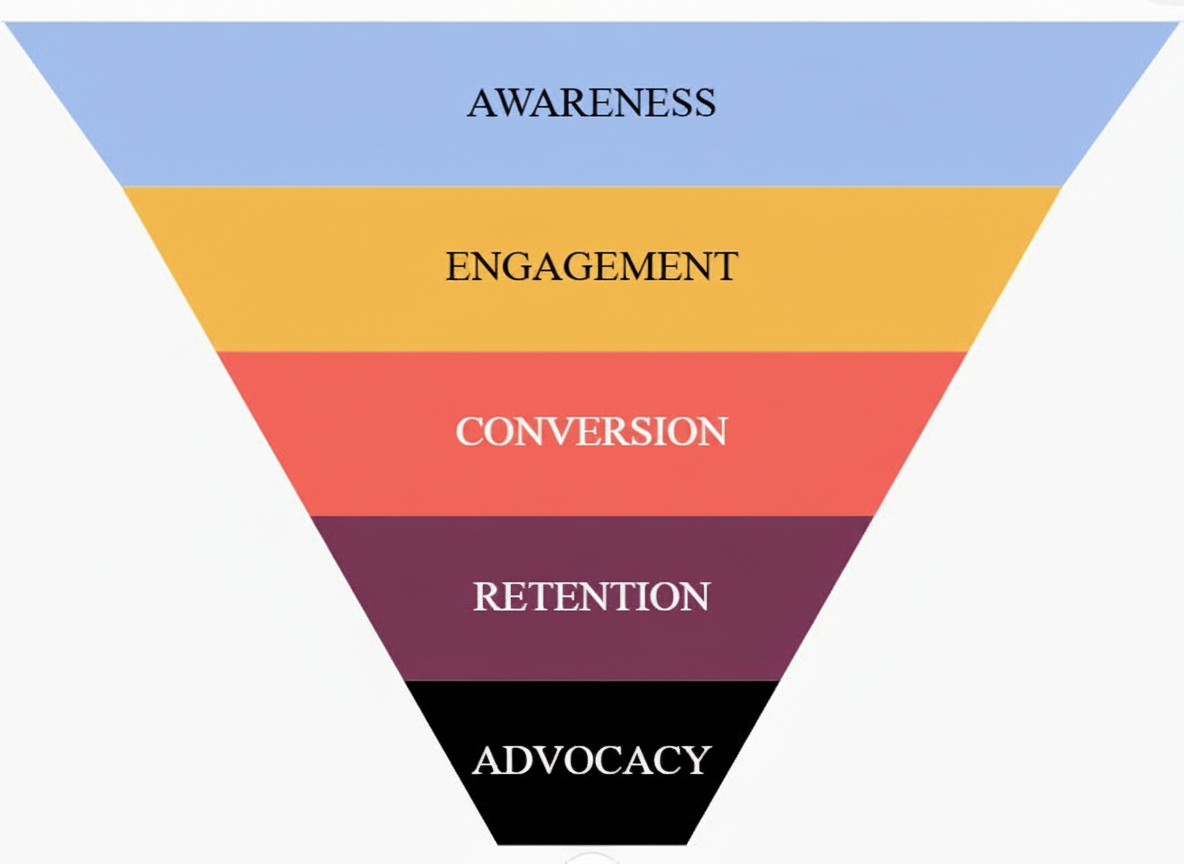
Awareness → Engagement → Conversion → Retention → Advocacy
Each stage represents a different relationship between audience and brand, and therefore requires different types of marketing activity.
1. Awareness: Being Known
At the top of the funnel, the objective is simple: exist in the audience’s world. If people don’t know you exist, nothing else matters. Awareness activity focuses on- brand visibility, reach and discovery, and entering audience consideration.
Typical channels include
PR
social media
advertising
partnerships
thought leadership
search visibility
But awareness is not just about volume, the most effective awareness activity ensures people understand what you stand for and why you matter. Without this clarity, awareness creates attention but not momentum.
2. Engagement: Creating Interest
Once people know you exist, the next challenge is giving them a reason to care. Engagement moves audiences from passive awareness to active interest. This stage is about - explaining your value, building trust and helping people understand value. This includes:
insightful content
educational resources
email newsletters
social interaction
webinars or events
deeper website exploration
Engagement is where brand promise becomes credible. If awareness answers “Who are you?” . Engagement answers “Why should I care?”
3. Conversion: Turning Interest Into Action
Conversion is where marketing delivers tangible commercial impact. This is the moment when audiences decide to: buy, subscribe, enquire, donate, sign up or request a proposal. Many organisations mistakenly focus only on this stage. But conversion only works when the earlier stages have done their job. When awareness and engagement are strong, conversion becomes a natural next step rather than a hard sell.
Effective conversion marketing focuses on:
clear propositions
strong calls to action
reducing friction
building confidence in the decision
4. Retention: Delivering on the Promise
Winning a customer is only the beginning. Retention ensures the experience matches the expectation marketing created. This stage is often overlooked by marketing teams but has huge commercial impact. This is where having clarity on your brand purpose comes in, it answers the ‘why’ audiences should care helps with audience retention.
Retention includes:
onboarding experiences
helpful communications
customer support
ongoing value delivery
loyalty incentives
When organisations focus on retention, they reduce acquisition pressure and build long-term relationships rather than one-off transactions.
5. Advocacy: When Customers Become Growth
The most powerful marketing doesn’t come from brands. It comes from people. Advocacy happens when satisfied customers actively recommend, promote, and champion a brand.
This might look like:
reviews and testimonials
word-of-mouth referrals
social sharing
case studies
community participation
Advocacy transforms marketing from broadcasting messages to creating momentum. At this stage, customers become part of the growth engine.
Why the Funnel Still Matters
Some marketers argue that funnels are outdated. But the funnel isn’t about rigid stages or linear journeys. It’s about recognising a simple truth: People rarely move from ignorance to loyalty in a single step.
The funnel provides clarity about:
where audiences are in their journey
what they need next
how marketing contributes to commercial outcomes
Without this structure, marketing becomes reactive and fragmented, with it, marketing becomes a system designed to move audiences forward.
The Real Power of Funnel Thinking
The real value of a funnel isn’t the model itself. It’s the conversations it creates inside organisations & it forces teams to ask important questions:
Where are we strongest in the funnel?
Where are we losing people?
Are we investing in awareness but neglecting retention?
Are we expecting conversion before building trust?
These questions shift marketing from activity to effectiveness.